Fritz Haber
1868–1934 · Wrocław
Nobel chemist whose ammonia synthesis helps feed half the world
2 stamps · 1 countries
One life, many countries
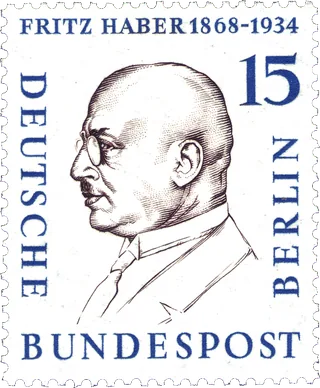 1957West Berlin
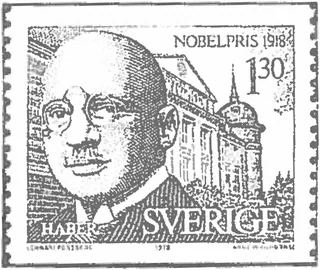 1978Unknown issuer
Fritz Haber was born in 1868 in Breslau, then part of Prussia, into a Jewish merchant family, and as a young scientist accepted baptism in the hope of an academic career. His great achievement was a way to bind nitrogen from the air with hydrogen to produce ammonia. Scaled up for industry together with Carl Bosch, the process made artificial fertilizer cheap and plentiful; the food grown with it is thought to sustain nearly half of humanity. The discovery earned him the 1918 Nobel Prize in Chemistry. With Max Born he also devised the Born–Haber cycle for calculating the energy of ionic crystals. His legacy is darkened by his zealous work on poison gas for Germany during the First World War. In 1933 the Nazi regime drove him from the institute he had built, and he died in exile in Basel the following year.
Facts checked against Wikipedia ↗